
How black caviar benefits the body and how to eat it
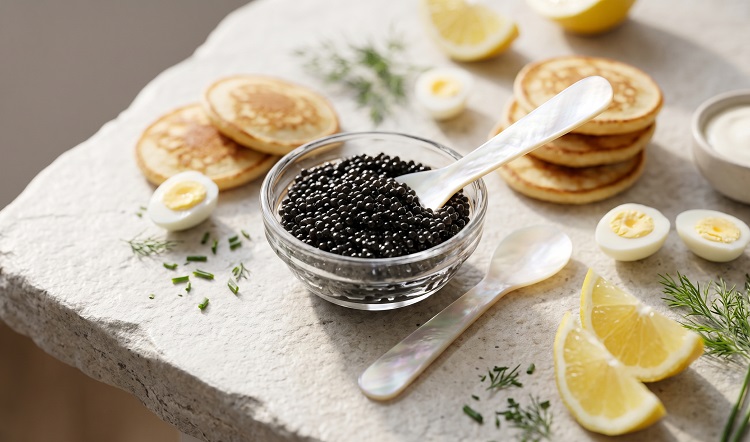
Black caviar – a valuable food product containing complete protein, omega-3 fatty acids, vitamins B12 and D, selenium, and other nutrients essential for the normal functioning of the body. It can complement a daily diet, but due to its high salt concentration, it is best consumed only in small portions. In addition, it is worth remembering that its health benefits depend on the product's composition and your overall diet.
Nutritional Value and Calories of Black Caviar per 100 Grams
According to USDA FoodData Central, 100 g of granular caviar contains approximately 264 kcal, 24.6 g of protein, and 17.9 g of fat. However, the nutritional value of a specific product may vary depending on the producer and the curing method.
|
Nutrient |
Per 100 g |
Per 20 g serving |
Role in the body |
|
Calories |
264 kcal |
53 kcal |
Energy |
|
Protein |
24.6 g |
4.9 g |
Tissue building and repair |
|
Omega-3 EPA and DHA |
5.54 g |
1.11 g |
Cell membranes, heart and nervous system function |
|
Vitamin B12 |
20 mcg |
4 mcg |
Blood formation, nervous system |
|
Vitamin D |
2.9 mcg |
0.58 mcg |
Calcium metabolism, bone health |
|
Selenium |
65.5 mcg |
13.1 mcg |
Antioxidant protection |
|
Sodium |
1500 mg |
300 mg |
Fluid and electrolyte balance |
|
Cholesterol |
588 mg |
118 mg |
Involved in the synthesis of hormones and cell membranes |
Important! The figures provided are approximate, as specific values depend on the quality of the caviar itself, the salting method, and other factors.
Health Benefits of Black Caviar for the Body
Black caviar is a rich source of beneficial vitamins, macro- and microelements. In particular, its composition includes:
- Omega-3 (EPA and DHA). These fatty acids are part of cell membranes and participate in the functioning of the cardiovascular, nervous, and immune systems.
- Vitamin B12. It is essential for red blood cell formation, DNA synthesis, and normal nervous system function. Caviar contains a significant amount of this vitamin.
- Vitamin D. Participates in the absorption of calcium and phosphorus, and supports the health of bones, muscles, and the immune system.
- Selenium. Forms part of enzymes involved in antioxidant defense and metabolism.
- Protein. Contains essential amino acids necessary for maintaining muscle tissue, cell regeneration, and other processes in the body.
Benefits of Black Caviar for Women
Caviar contains vitamin B12, iron, and omega-3. These nutrients are involved in blood formation, supporting the normal functioning of the nervous system, and cellular metabolism. Therefore, their benefits for the female body can hardly be overestimated. However, it is worth remembering that a small portion of caviar does not replace a balanced diet and is not a treatment for iron deficiency.
Benefits of Black Caviar for Men
Omega-3 fatty acids form part of cell membranes and play a role in the functioning of the cardiovascular system. Protein provides the body with amino acids required for muscle recovery after physical exertion. At the same time, consuming caviar does not guarantee improved athletic performance or changes in hormone levels.
How Much Black Caviar Can You Eat per Day: Recommended Intake
There is no official daily allowance for black caviar. However, the recommended serving is – 20-30 g, or roughly 1-2 heaped tablespoons. This is because 20 g of caviar contains about 300 mg of sodium, which is equivalent to 0.75 g of salt. That accounts for approximately 15% of the WHO-recommended daily salt limit – 5 g per day. When consuming 30 g of caviar, the sodium amount increases to 22.5% - nearly a quarter of the daily limit. Therefore, it is wiser to enjoy this delicacy in small portions several times a week while taking into account salt intake from other foods.
How to Eat Black Caviar for Health Benefits
Caviar can be paired with a boiled egg, fresh cucumber, avocado, whole-grain bread, or boiled potatoes. Such foods complement the appetizer with protein, fiber, and other nutrients.
At the same time, white bread with butter does not destroy the beneficial properties of caviar. However, this combination increases the calorie content of the dish and the amount of saturated fats, so portion size should be considered when managing your diet.
Black vs. Red Caviar: Which Is Healthier
Both black and red caviar contain protein, fats, omega-3 fatty acids, vitamins, and minerals. However, their exact composition depends on the fish species, processing method, and salt content. The USDA provides general data for granular black and red caviar, so they cannot be compared by specific nutrients based on that entry alone. Consequently, there is no definitive answer as to which caviar is healthier - black or red.
|
Indicator |
Black Caviar |
Red Caviar |
|
Protein |
High content |
High content |
|
Omega-3 |
Contains EPA and DHA |
Contains EPA and DHA |
|
Calories |
Depends on species and salting method |
Depends on species and salting method |
|
Salt |
Can be high |
Can be high |
Therefore, when choosing, you should focus on the ingredients, salt content, and quality of the product rather than just the color of the caviar.
Can Pregnant Women and Children Eat Black Caviar
For pregnant women and children, caviar can be a source of protein and beneficial nutrients, though it is important to consider food safety, salt content, and potential allergies. During pregnancy, only safe, pasteurized products stored under proper conditions should be chosen. Raw or insufficiently processed fish products may pose a risk of foodborne infections.
For children, the amount and possibility of introducing caviar into the diet are best discussed with a pediatrician, especially if there is a history of allergic reactions or medical conditions.
Contraindications: Who Should Limit Black Caviar
Moderation in consuming black caviar is particularly important for individuals with hypertension, kidney disease, a tendency toward edema, or those following a low-sodium diet. In case of an allergy to fish or roe, the product should be excluded altogether. If there is a history of other chronic conditions, consulting a doctor before consumption is necessary to rule out contraindications.
Frequently Asked Questions
- How many calories are in a teaspoon of black caviar?
A teaspoon (approximately 5 g) contains about 13 kcal. The exact value depends on the product's composition.
- Can you eat black caviar every day?
There is no strict prohibition, but daily consumption is not necessary. Due to its salt content, it is better to practice moderation and take your overall diet into account.
- Is there a difference in health benefits between caviar with and without preservatives?
A preservative does not automatically make the product less healthy. It can ensure food safety and extend shelf life. What matters are permitted ingredients, quality of raw materials, and adherence to production standards.
- Does black caviar increase hemoglobin levels?
Caviar contains iron and vitamin B12, which are involved in blood formation. However, it is not a treatment for anemia and does not guarantee an increase in hemoglobin.



Уважаемый клиент!
В связи с новогодними праздниками с 30.12.2019 года по 08.01.2020 года включительно, заказы не принимаются.
При заказе товара сегодня, его оформление будет осуществлено 09.01.2020 года!
Всех поздравляем с Новым Годом 2020 и Рождеством Христовым! Желаем Вам осуществления всех заветных желаний, достатка, любви и благополучия !!!!!
Друзья всех поздравляем с праздниками, желаем мира, здоровья и довольства!
Заказы принимаем до 17 часов 30.12 с отправкой сегодня.
Остальные заказы будут отправлены с 03.01.23 максимально быстро.
All orders received after 4:00 PM on December 30, 2025 will be processed and shipped on January 5, 2026.
Happy New Year!
All orders received before 17:00 30.12.2020
All orders received after the specified period will be processed before 01/05/2022
You are being redirected
to the payment page


